Transform That Empty Corner With These Floor Lamp Designs
Disclosure : This post may contain affiliate links or paid partnerships. I may earn compensation if you click a link or make a purchase, at no additional cost to you. See my disclosure for more info.
You walk past it every single day.
That empty corner in your living room. The one that stares back at you like a missing tooth in an otherwise decent smile.
You’ve tried ignoring it. You’ve scrolled through hundreds of Pinterest boards at midnight, saving ideas you’ll never use. You’ve even considered shoving a random plant there, just to fill the void.
But deep down, you know.
That corner is dragging your entire room down. And no amount of throw pillows on the sofa can distract from it.
Here’s the thing nobody tells you: an empty corner doesn’t just look unfinished. It makes your whole space feel unfinished. And that feeling follows you around, quietly, every time you sit on your couch or host a friend.
The good news? You don’t need a renovation. You don’t need an interior designer charging you a fortune.
You need the right floor lamp.
Not just any floor lamp, though. The wrong one will make things worse. The right one will transform that neglected corner into the most intentional spot in your home.
Let me show you exactly how.
Why That Corner Bothers You More Than You Think
Let’s talk about what’s really going on.
You spent time choosing your furniture. You picked a rug you liked. Maybe you even painted an accent wall.
But that corner? It just… happened. You ran out of ideas, or budget, or energy. And now it sits there, mocking your efforts.
Here’s what most people don’t realize: corners set the tone for the entire room. Interior stylists know this. That’s why every well-designed room you’ve ever admired in a magazine has something thoughtful happening in the corners.
A bare corner creates visual tension. Your eye doesn’t know where to land. The room feels off-balance, even if you can’t pinpoint why.
And that nagging feeling? That’s not you being dramatic.
That’s your brain telling you the room isn’t finished.
A floor lamp does something almost magical in a corner. It adds height. It adds warmth. It draws the eye upward and outward, making the space feel larger, cozier, and more deliberate.
But you have to choose wisely.
The Mistake That Ruins Most Corner Lighting
Before we get into the designs that actually work, let’s talk about the mistake that sabotages most people.
They buy a floor lamp based on how it looks in the store.
Or worse, how it looks in someone else’s room on Instagram.
A lamp that looks stunning in a bright, airy Scandinavian loft will look completely out of place in your warm-toned, mid-century living room. Context is everything.
The second mistake? Ignoring scale.
A petite, delicate lamp in a corner next to a massive sectional sofa looks like an afterthought. A hulking industrial lamp next to a small reading chair looks aggressive.
The lamp needs to match the energy of the corner it occupies.
Keep that in mind as we go through these designs. Every single one works brilliantly — but only when placed in the right setting.
1. The Arc Floor Lamp: Instant Drama Without Trying
If you want one piece that makes people stop and look, this is it.
An arc floor lamp has a curved arm that extends outward, casting light away from the base. Think of it as a chandelier that doesn’t require ceiling wiring.
It works exceptionally well in corners behind sofas or next to reading areas. The curve creates a canopy of light that feels intimate without closing off the space.
The trick? Make sure the arc reaches over something purposeful. A sofa armrest. A side table. A reading nook. If the arc just hangs over empty floor, the lamp loses its point.
Arc lamps pair beautifully with low-profile furniture. If your corner sits next to a modern sectional or a streamlined mid-century sofa, this is your move.
One thing to watch: arc lamps need a heavy base to stay stable. If you have small children or pets, check that the base is wide and weighted enough not to tip.
2. The Tripod Floor Lamp: When You Want Character Without Clutter
There’s something about a tripod lamp that instantly makes a corner feel curated.
Maybe it’s the three-legged stance that reminds you of an artist’s easel or a photographer’s setup. Either way, it adds personality without overwhelming the space.
Tripod lamps work in nearly every style of room. Wood legs for a Scandinavian or bohemian vibe. Metal legs for something more industrial or modern.
The beauty here is simplicity. A tripod lamp doesn’t need a side table or accessories around it to look complete. It stands on its own — literally and visually.
Best placement tip: position it so one leg faces the wall and two legs face the room. This gives the lamp a more stable visual footprint and prevents it from looking awkward against the wall.
If your corner is narrow, a tripod lamp is forgiving. The legs splay outward, but the footprint at the top stays slim.
3. The Torchiere: Lifting Low Ceilings With Light
You know that room that always feels a bit dark and squat, no matter how many table lamps you add?
A torchiere fixes that.
This style directs light upward toward the ceiling. The ceiling then reflects that light back down into the room, creating ambient illumination that feels natural and even.
If your corner has a low ceiling or sits in a room without overhead lighting, a torchiere is a game-changer. It mimics the effect of recessed lighting without any installation.
Modern torchieres come with dimmable LED options, which means you can control the mood. Bright and energizing during the day. Warm and soft at night.
The one rule: avoid placing a torchiere directly under a colored or dark ceiling. The whole point is ceiling reflection. A dark ceiling absorbs the light instead of bouncing it back. White or light-colored ceilings give you the best effect.
4. The Pharmacy Floor Lamp: Precision Where You Need It
This one is criminally underrated.
A pharmacy lamp — sometimes called a task lamp — has an adjustable arm and shade that lets you direct light exactly where you want it.
Originally designed for doctors’ offices (hence the name), this style has been adopted by interior designers for reading corners, home offices, and craft spaces.
If your empty corner is near a chair where you read, sketch, or work, a pharmacy lamp gives you focused, directional light without flooding the rest of the room.
It’s slim. It’s functional. And it looks incredibly intentional.
Styling note: pharmacy lamps tend to look best in pairs with a small side table or a stack of books nearby. They’re task-oriented by nature, so giving them a “task” to illuminate makes the corner feel purposeful.
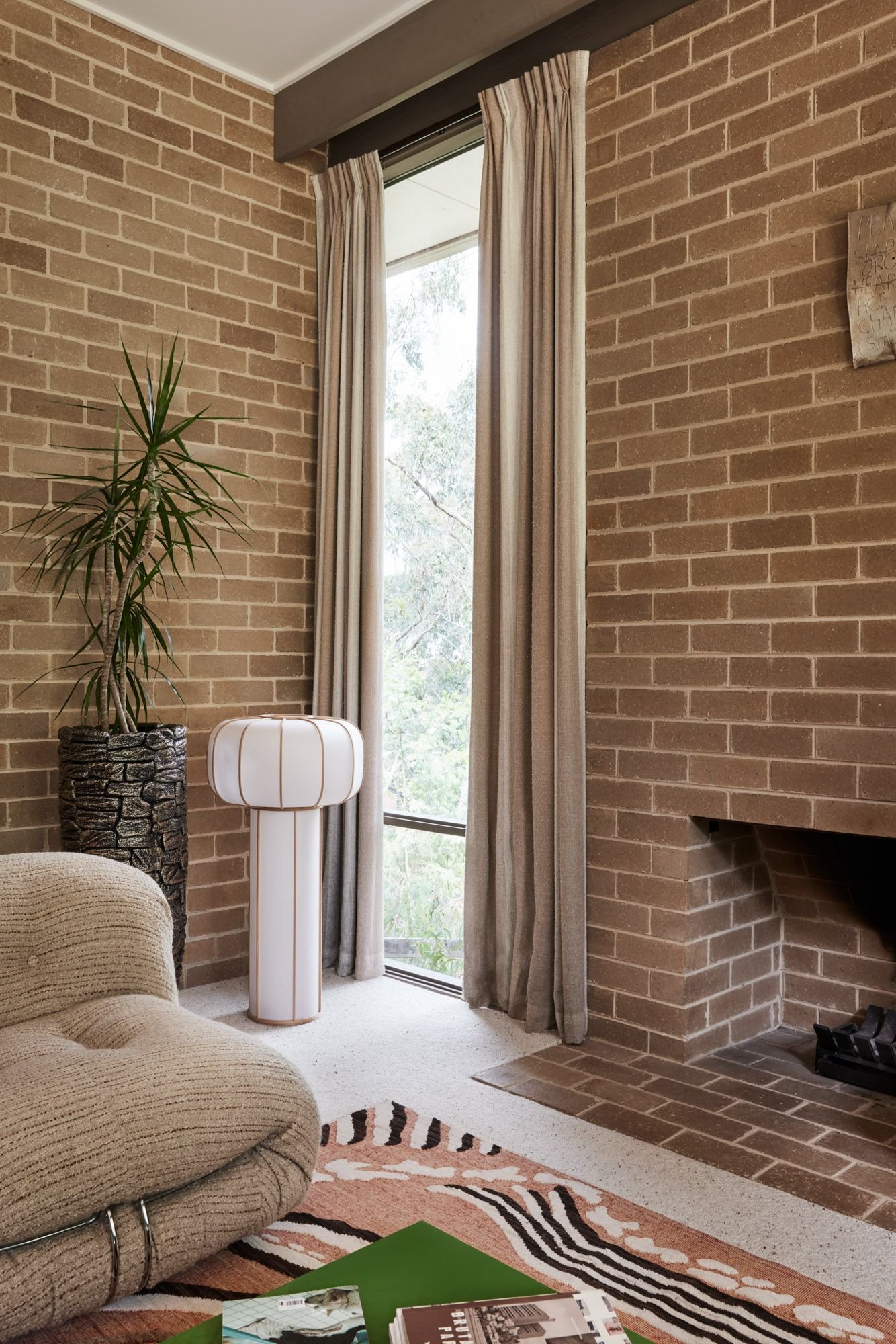
5. The Statement Sculptural Lamp: When the Lamp IS the Decor
Sometimes the corner doesn’t need lighting at all.
Sometimes it needs art that happens to glow.
Sculptural floor lamps are pieces where the design of the lamp itself is the focal point. Think twisted metal forms, asymmetric shapes, or organic silhouettes that look like they belong in a gallery.
These lamps don’t cast the most functional light. That’s not the point.
The point is to fill that corner with something that sparks conversation. Something that makes a guest pause and say, “Wait, where did you get that?”
Fair warning: sculptural lamps can go wrong fast. The line between “artistic statement” and “bizarre object” is thin. Choose one design element — an unusual shape OR an unusual material OR an unusual color — and keep the rest neutral.
Going bold on all three axes turns your corner into a circus.
6. The Shelf Floor Lamp: Two Problems, One Solution
Here’s one for those of you who have an empty corner AND no surface space for books, photos, or small plants.
A shelf floor lamp combines a light source with built-in shelves along the stand. You get illumination and display space in a single vertical footprint.
This is especially useful in small apartments or rooms where every square foot matters.
Stack a few books on the shelves. Place a small potted succulent on another. Maybe a framed photo. Suddenly your empty corner has layers, depth, and purpose.
The key to making it work: don’t fill every shelf. Leave one or two empty. Overcrowding the shelves makes the lamp look like a cluttered bookcase, and you lose the clean, intentional aesthetic.
Negative space is your friend. Let the lamp breathe.
7. The Rattan or Woven Floor Lamp: Warmth You Can Feel
If your room skews toward natural materials — wood furniture, linen textiles, earthy tones — a rattan or woven floor lamp is the perfect corner companion.
When lit, these lamps cast patterned shadows through the weave. The effect is warm, textured, and almost hypnotic.
They work incredibly well in bedrooms, sunrooms, and boho-style living spaces.
One consideration: woven shades diffuse light more than they direct it. You get a soft glow, not a bright beam. If you need reading light, this isn’t your lamp. If you need atmosphere, it’s unbeatable.
Pair it with a floor cushion or a low basket, and your corner transforms into a relaxation zone.
How To Pick the Right Lamp for YOUR Corner
Here’s where most people stumble. They see a lamp they love and impulse-buy without measuring — their corner, their room’s light needs, or their existing style.
So before you add anything to your cart, run through this quick filter:
What does the corner need functionally? Task lighting for reading? Ambient glow for mood? Just visual interest? Your answer determines the lamp category.
What’s the ceiling height? Tall ceilings handle arc lamps and torchieres beautifully. Lower ceilings call for pharmacy lamps or tripods that sit at moderate height.
What’s the room’s dominant style? Match the lamp’s material and silhouette to your existing furniture. A chrome arc lamp in a rustic farmhouse room will clash, no matter how beautiful the lamp is on its own.
How wide is the corner? Measure it. Arc lamps and tripods need floor space. Shelf lamps and pharmacy lamps have narrower footprints.
Five minutes of assessment saves you from a return headache and a corner that looks worse than before.
The Lighting Trick That Makes Any Floor Lamp Look Expensive
Here’s a tip that interior designers use constantly, and it costs nothing.
Layer your lighting.
A floor lamp alone in a room looks like a band-aid. A floor lamp combined with a table lamp across the room and maybe a candle on the coffee table? That looks designed.
Your corner lamp shouldn’t be the only light source in the space. It should be part of a trio — at minimum.
Think of it like music. A solo instrument can be beautiful. But an ensemble creates depth.
The same principle applies to your room. When you layer light at different heights — a floor lamp high, a table lamp mid-level, candles low — you create visual richness that makes the entire space feel warmer and more sophisticated.
Your corner lamp is the anchor. Build around it.
Stop Overthinking, Start Transforming
That corner has been empty long enough.
You don’t need to redesign your entire room. You don’t need to spend a month deliberating. You need one good floor lamp that fits the scale, style, and function of that specific spot.
Pick the design that matches your room’s personality. Measure your space. Consider the light you actually need.
And then place it in that corner and watch the whole room shift.
Because here’s the truth: a single well-chosen floor lamp doesn’t just fill a corner.
It completes a room.
And once you see the difference, you’ll wonder why you waited so long to do something so simple.
Your corner is ready. Now go light it up.