Green Front Door Colors That Feel Fresh, Elegant, and Welcoming
Disclosure : This post may contain affiliate links or paid partnerships. I may earn compensation if you click a link or make a purchase, at no additional cost to you. See my disclosure for more info.
You’ve been staring at your front door for weeks now.
Maybe months.
Every time you pull into the driveway, something feels… off. The color is tired. Dated. It whispers “2012 builder-grade beige” when you want it to scream personality.
You’ve scrolled through Pinterest until your eyes burned. Saved dozens of pins. And somehow, you’re even more confused than when you started.
Here’s the thing. Your front door is the handshake of your home. It’s the very first impression every visitor, every delivery driver, every neighbor walking by, gets of who you are.
And right now? That handshake is limp.
You want green. You can feel it. Something fresh. Something that says elegant without trying too hard. Something that makes your house look like it belongs in a design magazine — but still feels like home.
The problem? There are roughly a thousand shades of green out there. And picking the wrong one can make your house look like a frog, a hospital hallway, or a 1970s kitchen nightmare.
You don’t want that.
So let’s fix this. Right now. You’re about to discover the best green front door colors that actually work — and more importantly, why they work, so you never second-guess yourself again.
Why Green Works Better Than You Think for a Front Door
Before we dive into specific shades, let’s talk about why green is such a powerhouse choice.
Green is the color your eyes process most easily. It sits right in the middle of the visible light spectrum. That’s not opinion — that’s science.
It means green feels naturally restful. Balanced. Easy.
But here’s where it gets interesting for curb appeal.
Green is one of the few colors that works with almost every exterior material. Brick? Gorgeous. Stone? Stunning. Wood siding? Absolutely. White clapboard? Chef’s kiss.
Very few colors have that kind of versatility. Blue can feel cold. Red can clash. Yellow can overwhelm.
Green just… fits.
And it carries a psychological weight, too. Green signals growth, renewal, welcome. Subconsciously, a green front door tells visitors: come in, you’re safe here.
Pretty powerful for a coat of paint, right?
Now, let’s get to the shades that deliver real results.
1. Sage Green — The Quiet Sophisticate
If your style leans toward quiet luxury, sage is your shade.
Sage green has gray undertones that keep it from looking too “earthy” or rustic. It reads as refined without being stuffy.
This shade pairs beautifully with warm whites, cream-colored trim, and natural stone. Think modern farmhouse. Think coastal cottage with old soul charm.
Where sage really shines? Homes with a lot of warm tones. If your exterior brick has peach, salmon, or golden undertones, sage green will complement them without competing.
Pro tip: Sage can look washed out in direct, harsh sunlight. If your front door faces south and gets blasted with afternoon sun, consider going one shade deeper than the swatch you love. Paint always dries lighter than you expect.
Always.
2. Hunter Green — The Timeless Classic
Hunter green is the little black dress of front door colors.
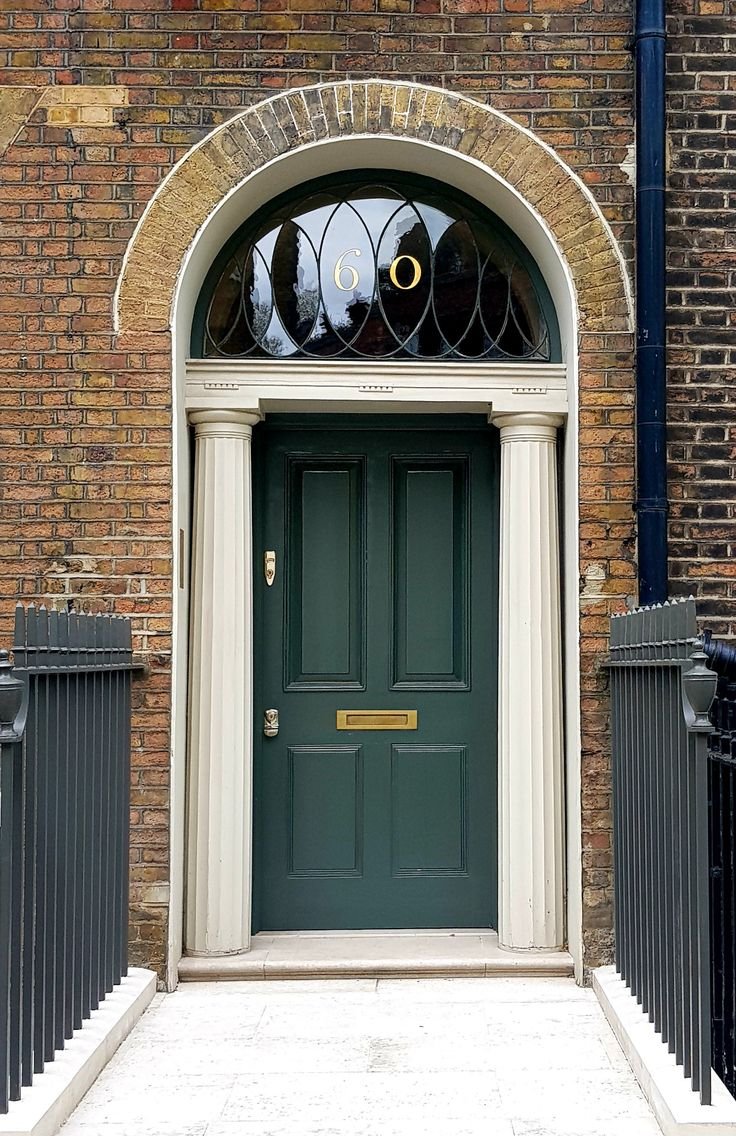
It has worked for Georgian townhouses for centuries. It works on Craftsman bungalows. It works on modern builds with clean lines and big windows.
Why? Because hunter green reads almost like a neutral dark. It has the depth of black but with warmth. It has the richness of navy but with more life.
If you want a front door that looks expensive — the kind that makes people pause on the sidewalk — hunter green with polished brass hardware is an almost unfair combination.
Brass door knocker. Brass kick plate. Brass house numbers.
That’s the formula. It works every single time.
Where it struggles: Homes with very cool gray exteriors. Hunter green has yellow-based undertones, and against blue-gray siding, it can create a tension that feels unresolved. If your house is cool-toned, keep reading — there’s a better green coming up.
3. Olive Green — Earthy Warmth That Doesn’t Try Too Hard
Olive green flies under the radar. And that’s exactly why it’s brilliant.
It sits somewhere between green and brown, which gives it an incredibly grounded, organic feel. Olive doesn’t scream for attention. It earns it slowly.
This shade is spectacular on homes surrounded by natural landscapes. Wooded lots, desert gardens, stone pathways. If your home’s surroundings are part of its identity, olive green lets the door feel like it grew there.
It also works remarkably well with dark exterior colors. Charcoal siding, dark brown shingles, even black window frames.
Where most greens would look out of place next to very dark tones, olive bridges the gap. It’s green enough to feel alive, but muted enough to feel sophisticated.
One caution: Olive can lean muddy in low light. If your front door is recessed or shaded by a deep porch overhang, make sure you test your paint in that exact light. The shade you picked under showroom fluorescents? It might look completely different in the shadows.
4. Emerald Green — Bold, Unapologetic Drama
Want your front door to be the star of the show?
Emerald green doesn’t politely ask for attention. It demands it. And that’s not a bad thing.
This is a jewel tone. Deep, saturated, luxurious. Think of it as the velvet sofa of the front door world. It transforms even the simplest entryway into something that feels intentional and curated.
Emerald pairs best with high contrast. White trim is non-negotiable here. The crispness of white against the depth of emerald creates that jaw-drop moment you’re looking for.
Hardware choice matters, too. Matte black handles and hinges give emerald a modern edge. If you want old-world elegance, go antique brass.
Where emerald shines brightest: Homes with strong architectural details. If your entryway has molding, sidelights, a transom window, or a paneled door with good depth, emerald green will highlight every single detail.
If your door is flat and featureless, emerald can look a bit flat, too. In that case, consider upgrading to a paneled door first. Then paint it emerald. The difference will be staggering.
5. Forest Green — Depth Without the Drama
Forest green lives between hunter and emerald, but it has its own personality.
It’s darker than emerald. Less glossy in feel. More grounded, more serious — like the difference between a cocktail party and a fireside conversation.
Forest green is the shade that says this home has been here for a while, and it’ll be here long after you leave. It’s permanent. Substantial. Trustworthy.
This is a phenomenal choice for traditional and Colonial-style homes. Pair it with white or ivory trim, black shutters, and a classic door design, and you’ve got the kind of curb appeal that real estate agents dream about.
And speaking of real estate — green front doors have a real track record when it comes to perceived home value. The color green, particularly deeper shades, signals a well-maintained, thoughtfully designed home to prospective buyers.
You’re not just painting a door. You’re making an investment in your home’s first impression.
6. Mint Green — The Unexpected Charmer
Now, this one takes a little more courage.
Mint green is light, cheerful, and undeniably fresh. It’s the front door equivalent of a cold glass of lemonade on a summer porch.
Does it work for every home? Honestly, no.
But when it works, it really works.
Mint is magical on beach cottages, Key West-style bungalows, and pastel-friendly neighborhoods where charm is the entire point. It also looks incredible on mid-century modern homes with clean geometric lines and minimal trim.
The key to pulling off mint? Keep everything else restrained. White or very light gray exterior. Minimal accessories. Let the door be the only pop.
If you try to pair mint with too many other colors, it starts to look like an ice cream shop. That’s fun for vacation rentals, maybe. But not for a home you want to feel elegant.
7. Eucalyptus Green — The Modern Neutral
This is the shade that’s been quietly taking over designer portfolios for the last few years.
Eucalyptus sits between sage and mint. It has the softness of sage but with a cooler, slightly blue undertone that reads incredibly modern.
If your home’s exterior is cool-toned — think gray siding, blue-gray stone, white brick — eucalyptus green will feel like it was custom mixed just for your house.
It also works beautifully with matte black hardware, concrete planters, and modern house numbers. The whole modern-organic aesthetic? Eucalyptus is its poster child.
Styling tip: Flank a eucalyptus green door with potted greenery — real, not fake — and the effect is seamless. The door becomes part of the landscape rather than sitting on top of it. That subtlety is what separates nice curb appeal from stunning curb appeal.
How to Make Sure You Pick the Right Green
Alright. You’ve seen the options. Your heart is leaning toward one or two shades.
Before you buy a gallon and start rolling, here are the rules that separate a front door you love from a front door you regret.
1. Always test with a physical sample on your actual door. Screens lie. Every single screen — your phone, your laptop, your tablet — shows color differently. Order a peel-and-stick sample or paint a poster board and tape it to your door. Live with it for three days. See it in morning light, midday sun, and evening shade.
2. Consider your fixed elements. Your roof color, your stone or brick, your driveway, your walkway — these aren’t changing. Your green needs to work with what’s already there.
3. Finish matters more than you think. A high-gloss emerald green looks wildly different from a matte emerald green. Gloss reflects light, amplifies color, and shows every imperfection. Satin is the sweet spot for most front doors — it’s forgiving but still has enough sheen to look polished.
4. Don’t forget the edges. When your door is open, visitors see the edge. Paint it the same green. It’s a tiny detail that separates an amateur job from a professional one.
5. Think about seasonal decor. A deep hunter green might look incredible in autumn with a fall wreath, but will it work with your summer planters? The best front door colors look good twelve months a year.
Your Front Door Is Waiting
You’ve now got something most homeowners never get: clarity.
You know the shades that work. You know which ones match your style, your architecture, your gut feeling.
You have two choices.
Option one: Keep staring at that tired front door, scrolling endlessly, never committing. Watching another season pass with a home exterior that makes you feel nothing.
Option two: Pick the green that made your pulse quicken while reading this article. Order the sample. Tape it up. Feel the shift.
Because here’s what nobody tells you about painting your front door.
It’s not just paint. It’s the moment you decide that your home deserves to look like you. That the first thing people see should make them feel something.
Fresh. Elegant. Welcome.
That’s what the right green does.
And now you know exactly how to find it.