27 Chair Design Tips That Instantly Elevate Your Living Room’s Look
Disclosure : This post may contain affiliate links or paid partnerships. I may earn compensation if you click a link or make a purchase, at no additional cost to you. See my disclosure for more info.
You’ve walked into your living room again.
And again, something feels wrong.
You’ve changed the curtains. Tried a new rug. Moved the coffee table. Swapped the throw pillows twice.
Still looks off.
You scroll through Pinterest. You see those gorgeous living rooms with effortless style. Everything looks intentional. Everything looks curated.
Then you look at your own space.
And you think: “Why does my living room look like a furniture store clearance section?”
Here’s the brutal truth nobody’s telling you.
It’s not the paint. It’s not the lighting. It’s not even the sofa.
It’s the chairs.
Those chairs you impulse-bought because they were on sale. Those chairs you never really thought about. Those chairs that sit there, taking up space, contributing absolutely nothing to the room.
Chairs are the most underestimated piece of furniture in any living room. They take up massive visual real estate. They shape how people move, sit, and feel in your space.
Get them wrong, and everything else falls flat.
Get them right? The entire room transforms.
That’s what we’re doing today. Twenty-seven specific, actionable tips to make your chairs work for your living room instead of against it.
No fluff. No vague “just make it cozy” advice. Real stuff you can apply this weekend.
Let’s go.
Shape and Scale: The Silent Killers
1. Measure your room before you fall in love with a chair.
You saw it online. It looked stunning. You ordered it. It arrived.
And now it’s eating your entire living room.
This happens constantly. A chair that looked perfect in a 5,000-square-foot showroom becomes a monster in your 200-square-foot living area. Always measure first. Tape the footprint on your floor before buying. Always.
2. Mix curves into a room full of straight lines.
Rectangular coffee table. Square shelves. Boxy sofa. Everything in your room is an angle.
Your eye gets tired of that. Fast.
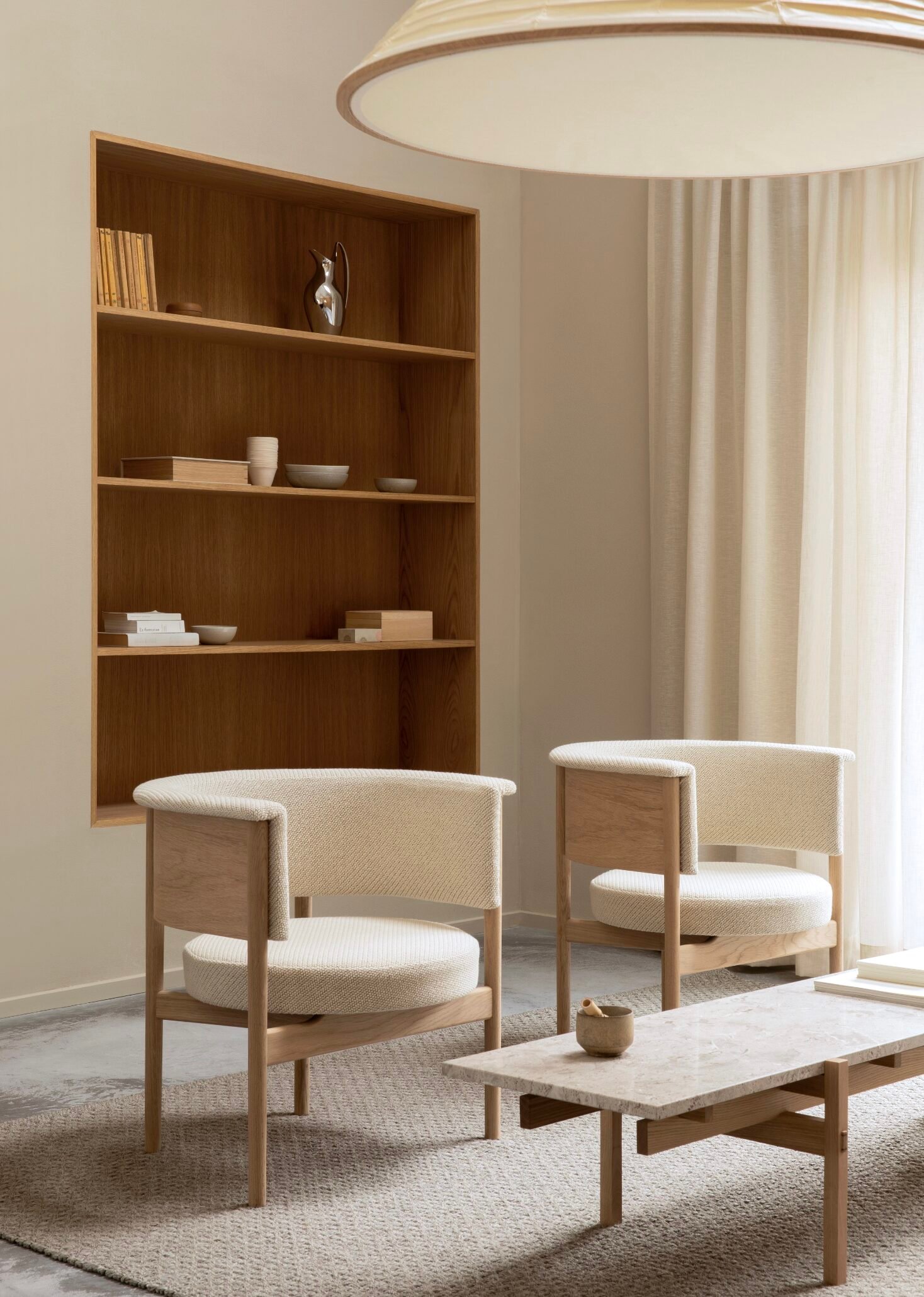
One chair with a rounded back or barrel shape breaks the visual monotony. It gives your eye a place to rest. It softens the whole space without you changing anything else.
3. Go low-profile to fake taller ceilings.
Low-slung chairs create an optical illusion.
More space between the top of the chair and the ceiling makes the ceiling feel higher. If you’re working with standard eight-foot ceilings, this trick alone changes the entire proportion of the room.
4. Choose legs that show the floor.
Tapered legs. Metal legs. Anything that lets you see the floor underneath.
More visible floor means the room feels lighter and bigger. Chunky skirted chairs that hide the floor? They do the exact opposite. Same footprint. Completely different visual effect.
5. Let one chair be oversized — on purpose.
This sounds contradictory after tip number one. It’s not.
One deliberately large statement chair — a generous wingback, a deep club chair — gives the room a focal anchor. The key word is “deliberately.” You chose it for the room. You didn’t just shove it in there.
Color and Fabric: Where You’re Probably Messing Up
6. Stop matching your chairs to your sofa.
This is the mistake almost everyone makes.
You buy a gray sofa, then you buy gray chairs. Everything matches. Everything is “safe.”
And everything is boring.
Contrast is what creates visual interest. A deep navy chair next to a gray sofa. An olive accent seat across from a beige couch. Your eye needs differences to stay engaged. Give it some.
7. Use texture when you’re scared of color.
Not everyone is ready for a mustard yellow accent chair. That’s fine.
But a bouclé chair in cream? A velvet seat in soft taupe? A nubby linen in off-white?
Those textures add richness and depth to your room without a single bold color. Your eye picks up on surface variation even when the palette stays neutral.
8. Pick performance fabric if real life happens in your home.
You have kids. You have pets. You have friends who spill wine.
That ivory linen chair is going to look tragic in about three weeks.
Performance fabrics like Crypton and Sunbrella have come a long way. They look like regular upholstery now. They resist stains. They clean easily. And they let you actually use your living room without anxiety.
Nobody talks about this. But it matters more than aesthetics.
9. Make one chair your room’s exclamation point.
One chair. One bold color. Mustard. Terracotta. Emerald. Deep plum.
Against an otherwise muted room, that single pop of color becomes the thing people notice first. It’s confident. It’s intentional. It tells everyone: this room was designed, not just assembled.
10. Embrace dark leather.
A cognac or espresso leather chair brings instant warmth and weight to a room.
And here’s the best part: leather develops patina. It gets better with age. It gets more character the more you use it. Very few materials can claim that.
11. Don’t ignore the back of the chair.
If your chair sits in the middle of the room, people see the back more than the front.
A chair with a beautiful back detail — a curved wooden frame, tufted upholstery, exposed joinery — becomes a visual asset from every angle. Not just from the front.
Most people forget this entirely.
Placement and Layout: The Invisible Architecture
12. Pull your chairs off the walls. Now.
This is the number one layout mistake in living rooms across the planet.
Every chair pushed flat against the wall. Like a middle school dance where nobody wants to be in the center.
Pull them forward. Even ten inches. The room instantly feels more intentional. More like a space that was designed, not just filled.
13. Angle chairs toward the conversation.
Set your accent chairs at roughly 30 to 45 degrees facing the sofa.
This creates a natural conversation zone. People instinctively face each other when they talk. Your furniture should make that easy, not awkward.
14. Build a reading nook with one chair.
One chair. One side table. One floor lamp. A corner of your living room.
That’s it. That’s a reading nook.
It gives the room a sense of purpose. A reason. It tells people: every spot in this room has a job. Nothing is wasted.
15. Flank your fireplace with a pair.
Two matching chairs on either side of a fireplace is one of the oldest design moves in the book.
It works because it creates symmetry. And our brains are hardwired to find symmetry beautiful. Even a modest fireplace gains presence when you anchor it with two flanking seats.
16. Float a chair to define zones in open-plan spaces.
Big open rooms are tricky. Where does the living room end? Where does the dining area start?
A chair placed at the edge of your seating arrangement acts as a visual boundary. No walls needed. No dividers. Just one well-placed chair.
17. Face a chair toward your best view.
That window with the garden view. That spot where the afternoon light pours in.
Put your best chair there. Comfort plus a beautiful view is what turns a living room from a showpiece into the place you actually want to spend time.
Details That Make Cheap Chairs Look Expensive
18. Swap the legs.
This tip alone is worth the entire article.
Most affordable chairs come with basic, uninspired legs. Plastic caps. Plain dowels. Nothing special.
Replace them. Tapered walnut legs. Brass-tipped ferrules. Matte black metal pins.
It takes ten minutes. It usually costs less than twenty dollars. And the chair suddenly looks like it costs three times more.
19. Add one lumbar pillow in a contrasting fabric.
Not three pillows. Not five. One.
A single throw pillow in a fabric that complements but doesn’t match the chair. Striped pillow on a solid chair. Velvet on linen. Textured on smooth.
It adds depth. It adds comfort. It looks styled without looking overdone.
20. Look for exposed wood or metal details.
Nail-head trim. A visible wood frame. Brass rivets.
These small elements signal craftsmanship. They whisper quality. They tell anyone who sits down: somebody cared about this piece.
21. Choose a chair with a sculptural shape.
Not every chair needs to be a rectangle with cushions.
A Womb chair. A wishbone frame. A shell seat. When the chair itself has an interesting silhouette, it doubles as art. The room becomes more dynamic just because that chair exists in it.
Functional Moves Most People Ignore
22. Add a swivel base for maximum flexibility.
A swivel chair turns toward the conversation. Toward the TV. Toward the window.
Without rearranging a single piece of furniture.
It’s the most versatile seating option you can put in a living room. Especially if your room serves multiple purposes — movie nights, conversations, reading, working from home.
23. Pair your chair with an ottoman.
A chair alone says: sit here.
A chair with an ottoman says: stay here. Relax. Put your feet up.
It transforms a seat into a destination. If your living room is supposed to be the place where you decompress, an ottoman pairing sends that signal loud and clear.
24. Layer a throw over one arm.
Three seconds. That’s all it takes.
Drape a knit or cashmere throw over one arm of your chair. Instantly, the chair looks styled, warm, and lived-in. It signals comfort. It invites people to sit down and stay a while.
Mistakes That Are Quietly Ruining Your Room
25. Stop buying chairs you’d never sit in for two hours.
That acrylic chair looked amazing on Instagram.
But it’s cold. It scratches. It wobbles on carpet. And nobody ever sits in it.
If a chair isn’t comfortable enough for a long phone call or a full movie, it doesn’t belong in your living room. Pretty is not enough. Function has to come first.
26. Check the seat depth before you buy.
Too deep, and you’re stuffing pillows behind your back just to sit upright.
Too shallow, and it feels like a perch, not a seat.
Sit all the way back. If your feet lift off the ground, it’s too deep for you. This matters way more than most people realize. Especially if you’re under five foot eight.
27. Rotate your chairs with the seasons.
You don’t need to buy new furniture four times a year.
But swapping a heavy leather armchair for a lighter rattan or wicker seat when summer comes? Adding a velvet cushion when winter hits?
That keeps your living room feeling alive. It evolves. It breathes. It never goes stale.
And it costs you almost nothing.
So What Now?
Here’s what’s really going on.
Your living room chairs aren’t just seats. They’re the pieces your guests notice first. They’re where you collapse after a long day. They’re the visual anchors that tie every other design choice together.
And most people treat them as an afterthought.
You don’t have to.
You don’t need to replace everything at once. You don’t need a designer. You don’t need a massive budget.
You need one tip from this list. Applied this weekend.
Then another one next week.
Then another.
Before you know it, your living room won’t just look different.
It’ll feel like the room you always pictured in your head. The one you’ve been chasing on Pinterest for years.
Except this time, it’s real. And it’s yours.
Start with one chair. Start today.