Steel, Wood & Soul – 39 Ways to Make an Industrial Living Room Feel Like Home
Disclosure : This post may contain affiliate links or paid partnerships. I may earn compensation if you click a link or make a purchase, at no additional cost to you. See my disclosure for more info.
Your living room has been bothering you.
Not in a dramatic way. More like a low hum you can’t quite tune out. Every time you settle onto the couch, something about the space feels hollow. Empty. Like the room is wearing someone else’s clothes.
You’ve done the research. Hours of it. Industrial interiors filled with brick, iron, weathered beams, metal pendants.
You’re drawn to it. That’s not the problem.
The problem is the gap between what you see online and what you imagine living inside. Those spaces look like converted power stations. Impressive? Sure. Somewhere you’d want to spend a Sunday morning? Not a chance.
“I love the look. But where’s the warmth?”
That thought keeps circling.
Here’s the real deal. The warmth is there — if you know where to build it. The strongest industrial rooms aren’t cold at all. They layer raw finishes with soft materials, rough edges with lived-in comfort, honesty with invitation.
It’s not about choosing between grit and coziness. It’s about weaving them together.
These 39 ideas show you exactly how. Every single one is designed to bring industrial character into your living room while keeping it a place you actually want to be.
Here we go.
Lighting Layers That Do the Heavy Lifting
Here’s the trap almost everybody falls into with industrial lighting.
One giant Edison pendant gets hung dead center. Done.
That’s not a lighting plan. That’s a lonely bulb on a cord.
Proper industrial lighting needs depth and dimension. Multiple sources, multiple moods.
1. Hang a group of pendants at staggered heights.
Three to five lights clustered together, each dropping to a different level. It creates rhythm and avoids the single-bulb cliché.
2. Station a matte black floor lamp with a movable arm nearby.
Architect-style lamps pull double duty — practical for task lighting, sculptural enough to earn their place in the room.
3. Fix wall sconces in an aged brass tone.
Here’s where industrial meets refined. Brass takes the chill off metal instantly. Flank the sofa or a piece of art with a pair for understated polish.
4. Thread industrial filament bulbs across the ceiling.
Not wispy fairy lights. Genuine filament bulbs on a weighty black cable, run in a deliberate line. High ceilings make this especially effective.
5. Lean into the power of real candles.
A handful of thick pillar candles resting on a metal tray contribute more warmth than any fixture you’ll find in a store. Open flame changes everything.
Living Things — The Quickest Route to Warmth
Want to know the fastest way to rescue an industrial room from feeling sterile?
Put something alive in it.
Greenery, raw materials, organic silhouettes. They neutralize hard planes, sharp corners, and frigid finishes in seconds.
6. Park a large plant in an empty corner.
A tall snake plant, a bird of paradise, or a rubber tree tucked into a woven planter. Fills dead vertical space and radiates life.
7. Gather small potted plants on a metal shelf.
Three to five small species — varied leaf textures, mixed heights. It makes an instant pocket garden.
8. Stand dried branches or pampas grass in a stoneware vase.
If you lack a green thumb, dried arrangements demand no maintenance and still push natural texture into the room.
9. Scatter natural stone accents — a marble dish, a geode bookend.
Stone slips in as another natural layer without competing with wood and metal already present.
Getting the Structural Bones Right
Before any object or accessory finds its spot, the architecture of the room needs to be locked in. These decisions shape everything that follows.
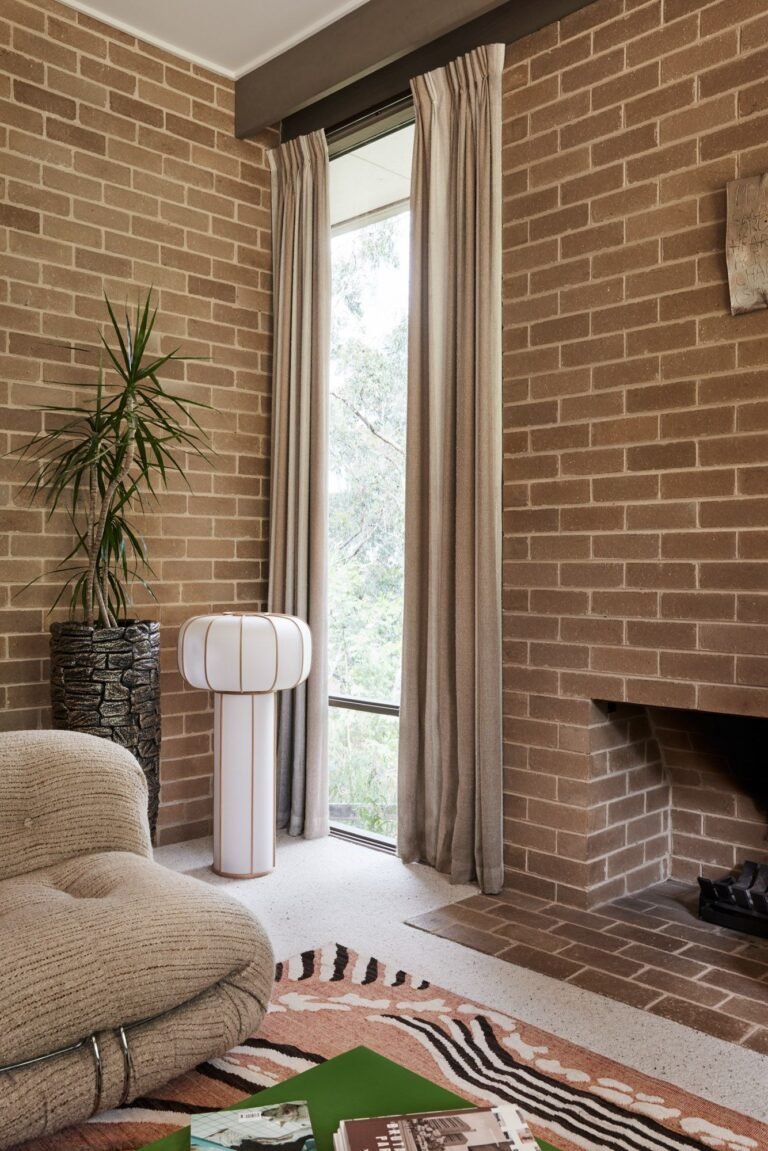
10. Expose a single brick wall while keeping the rest soft.
One accent wall does all the talking. Surrounding walls in warm white or gentle gray keep the room from feeling heavy.
11. Seal your concrete floors instead of leaving them raw.
Unsealed concrete reads warehouse. Polished or sealed concrete gives you the same industrial punch with a surface that feels intentional and livable.
12. Lay wide-plank salvaged wood flooring as a warmer option.
Reclaimed timber delivers texture, warmth, and history all at once. It anchors the room in a way concrete can’t.
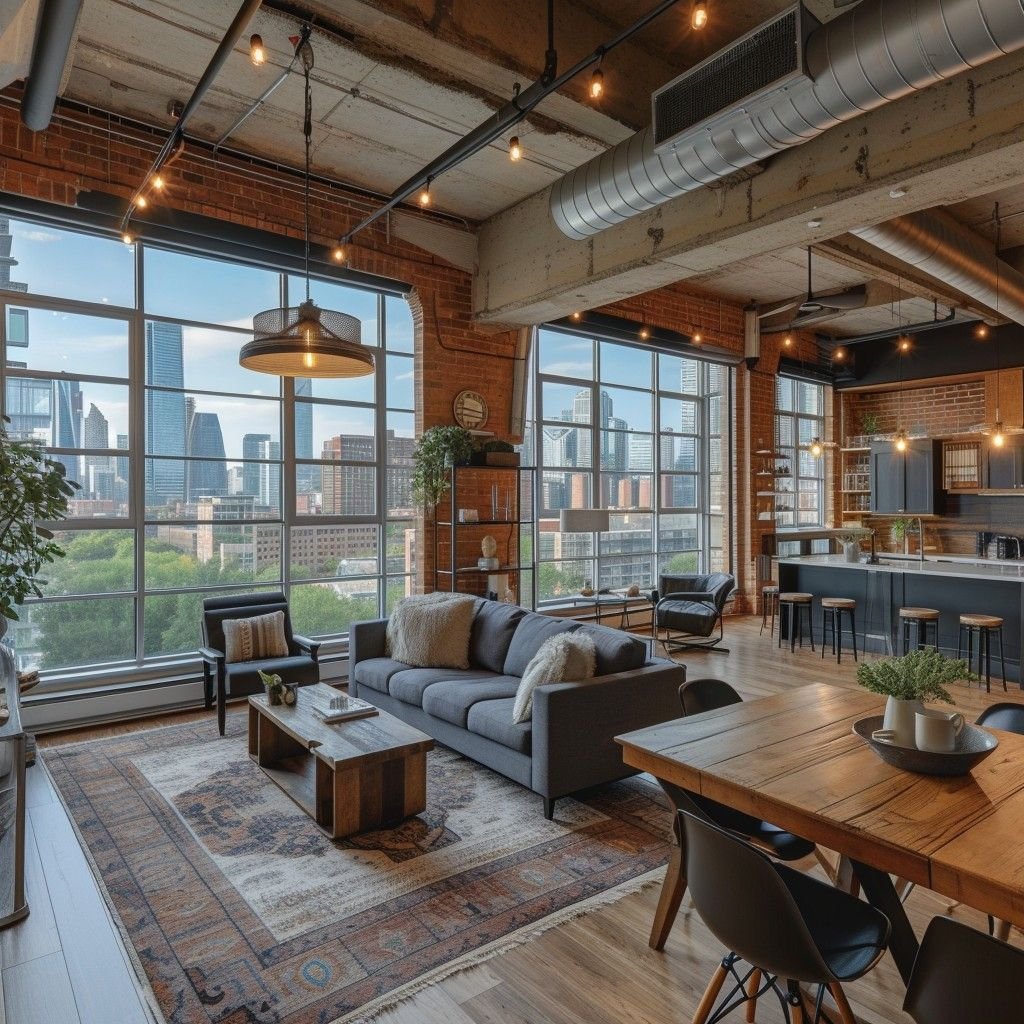
13. Fit oversized black steel-frame windows.
These frames are the architectural DNA of industrial style. They maximize natural light while delivering clean, factory-inspired lines.
14. Leave ceiling beams visible — but stain them in a warm tone.
Exposed beams telegraph industrial in an instant. A walnut or amber stain wraps that rawness in warmth from overhead.
15. Display open ductwork with intention.
Visible pipes can be striking or sloppy, depending on execution. A coat of matte black paint makes them look designed, not neglected.
Furniture Picks That Balance Edge With Ease
This is where people stall.
You fill the room with metal-framed, rivet-studded pieces. And suddenly it feels like an exhibition space for industrial hardware.
The solution? Counter every hard surface with a soft one. Metal and wood need fabric, leather, and texture as partners.
16. Start with a big, deep leather couch.
Distressed cognac or brown leather on an oversized sofa is the most powerful single move for injecting warmth. It wears in beautifully and invites everyone to drop in.
17. Place a live-edge wood coffee table with natural curves.
Slab or live-edge tables inject organic movement into all those rigid geometries. Find one with a genuine, unforced shape.
18. Introduce upholstered armchairs in a tactile fabric.
Velvet. Boucle. Heavyweight linen. Something that begs to be touched. Sit them opposite the couch to offset metal and timber with softness.
19. Style an iron-and-wood bookshelf with breathing room.
Don’t fill every shelf. Leave space. A few books, a ceramic piece, one plant. Open gaps make the difference between cluttered and curated.
20. Employ a weathered leather trunk as a side table.
It hides storage inside. It carries character. And it builds that accumulated-over-time feel that separates authentic from staged.
21. Drop a large woven pouf or floor cushion near the coffee table.
This one catches people by surprise. A chunky knit or woven pouf shatters the rigidity of surrounding surfaces and grounds the room with ease.
Color Choices That Warm the Room Up, Not Down
Here’s where your inner dialogue gets noisy.
“Industrial is just gray and black, right?”
Nope.
Those tones have their place. But a room painted wall-to-wall in gray and black is dreary, not industrial. Warmth needs to be sewn into the color story.
22. Choose warm white for walls over cool gray.
A slightly creamy white handles light with more softness. It maintains openness without the icy undercurrent of blue-gray shades.
23. Thread rust and terracotta into your accessories.
A rust-colored planter. Terracotta bowls. A burnt orange throw. These tones naturally harmonize with metal, brick, and timber.
24. Layer in deep green through plants and fabrics.
A monstera in a matte black planter. An olive cushion cover. Green infuses genuine life — and visual relief — into a space that could turn monotone fast.
25. Deploy matte black as a supporting player, not the lead.
Black frames. A black lamp. A black tray. But not every single element in black. Discipline is the secret.
Minor Upgrades That Create Major Impact
The details. They carry more weight than you’d guess.
These are the finishing moves that lift your living room from “solid attempt” to “they really know what they’re doing.”
26. Swap out standard switch plates for matte black or brass.
Minutes to install. Pennies relative to the payoff. Gone is the cookie-cutter rental look.
27. Face book spines inward on open shelves.
It creates a uniform, tonal texture across the shelf — creamy paper edges instead of a patchwork of colored spines.
28. Build a small coffee table vignette on a wooden board.
A round cutting board with a candle, a petite plant, and one book. A focused little composition that gives the surface reason and beauty.
29. Use matte-finish hardware everywhere — no exceptions.
Polished chrome sabotages industrial design on contact. Matte black, brushed brass, or aged iron are your non-negotiable choices.
30. Stack a faded vintage rug on top of a larger jute one.
Layered rugs bring richness and dimension. The vintage piece contributes color and motif; the jute base holds it all together.
31. Allow one visibly imperfect piece to stay.
A planter with a chip. A table showing saw marks. A chair with patina on its arms. That imperfection is what makes industrial style honest, not performative.
Textiles That Transform the Feel
Here’s a blunt truth.
An industrial living room with zero textiles isn’t really a living room. It’s an empty stage with props.
Fabric is what distinguishes “someone lives here” from “someone styled this for a camera.”
32. Spread a large jute or sisal rug beneath the seating area.
It grounds the space and inserts an entire layer of natural warmth. Go oversized — the rug should extend under the front legs of each major piece.
33. Toss a hefty knit throw over one sofa arm.
Instant. Easy. Disproportionately impactful. It tells every visitor before they sit down: this room is welcoming.
34. Mix linen and wool cushions in earthy colors.
No matching sets. Combine rust, cream, slate, olive. Different dimensions, different weaves. It should look accumulated, not ordered.
35. Put up floor-to-ceiling linen curtains in a warm neutral tone.
Even alongside striking steel windows, curtains blunt the sharpness. Oatmeal or flax linen, puddling slightly at the floor, does the job beautifully.
Dressing the Walls With Intention
Bare walls work in industrial spaces — when there’s stunning brick or raw concrete behind them.
Standard drywall left naked? That just looks… forgotten.
36. Feature one bold abstract piece in a minimal frame.
Scale up. A single oversized work above the couch or on the focal wall. A thin timber or bare metal frame stays on-brand without turning fussy.
37. Build a gallery wall from mixed frame materials.
Black iron, light wood, warm brass. Different shapes and sizes. It adds layers of identity and visual storytelling.
38. Position a large industrial mirror or vintage clock.
A round mirror in a metal frame reflects light and expands the room. A clock with exposed mechanics doubles as wall sculpture.
39. Prop art on a ledge or mantel instead of nailing it up.
Effortlessly simple. It gives the room an easygoing, collected spirit. More “lived in” than “designed by committee.”
Your Room Deserves Better Than “Almost There”
Here’s the truth of it.
You’ve likely tried fragments of this. Picked up the Edison bulb. Found a metal shelf you liked.
But the whole picture never came together.
That’s because warmth in an industrial room doesn’t hinge on one thing. It builds through the conversation between things. Hard next to soft. Dark meeting light. Rough rubbing shoulders with polished.
Every idea on this list connects with the others. You don’t need all 39. Select the ones that match your room, your resources, your rhythms.
Begin with one. Layer on the next.
Before long, you’ll walk in and that nagging feeling won’t whisper “something’s off.”
It’ll say: “Now this feels like mine.”
Stop saving ideas. Pick one. Make it real this weekend.
Your living room has been patient long enough.
🔍 Focus Keyphrase: industrial living room ideas
📌 SEO Title: 39 Industrial Living Room Ideas That Feel Like Home
🔗 Slug: industrial-living-room-ideas
📝 Meta Description: Discover 39 industrial living room ideas that balance raw style with real warmth. From lighting layers to textiles — make the look truly livable.