28 Japanese Bathroom Ideas That Redefine Everyday Relaxation
Disclosure : This post may contain affiliate links or paid partnerships. I may earn compensation if you click a link or make a purchase, at no additional cost to you. See my disclosure for more info.
You come home exhausted.
Your back hurts. Your mind is racing. Your phone won’t stop buzzing.
And the first thing you do? You walk into your bathroom, look around, and feel… nothing.
No calm. No relief. Just a cold, cluttered room with mismatched towels and a shower curtain you’ve been meaning to replace for two years.
Sound familiar?
Here’s the thing. Your bathroom could be the one place in your home that actually heals you. The one room that slows everything down the second you step inside.
That’s not some fantasy. That’s exactly what Japanese bathroom design is built to do.
Not for show. Not for Instagram. For you.
And you don’t need to gut your entire house, fly to Kyoto, or spend a fortune to get there.
You just need the right ideas. And the right approach.
So let’s get into it.
Why Japanese Bathrooms Feel So Different
Before we dive into the ideas, you need to understand something fundamental.
In Japan, the bathroom isn’t just a room. It’s a ritual.
Bathing is about cleansing the mind as much as the body. That philosophy shapes every single design choice — from materials to layout to lighting.
The result? A space that feels like a sanctuary.
And the best part? Most of these principles are dead simple to apply, no matter your budget or bathroom size.
Now, let’s break down the ideas that can transform your space.
The Layout & Flow
1. Separate the wet and dry zones
In traditional Japanese homes, the bathing area and the changing area are two distinct spaces. The idea is simple: keep water where water belongs.
Even in a small bathroom, a glass partition or a subtle step-down can create that separation. It keeps things drier, cleaner, and calmer.
2. Place the soaking tub as the centerpiece
Forget pushing the tub into a corner. In Japanese design, the tub commands the room.
It’s the main event. Everything else supports it.
If you have the space, position your soaking tub where it naturally draws the eye the moment you walk in.
3. Create a dedicated shower station outside the tub
This is one of the biggest differences from Western bathrooms. You wash before you soak.
A low shower station with a handheld showerhead and a small wooden stool lets you rinse off completely. Then, you step into clean, hot water.
The tub stays pristine. The ritual stays intact.
4. Keep the toilet in its own enclosed space
This isn’t about having a huge bathroom. Even a pocket door and a small partition will do.
The Japanese approach treats the toilet as a completely separate function. It makes the bathing area feel more like a spa and less like a utility room.
Materials That Set the Mood
5. Use hinoki (Japanese cypress) wood accents
Hinoki is the gold standard of Japanese bathroom wood. It’s naturally resistant to moisture and mildew.
But here’s what really sets it apart: the scent. Hinoki releases a warm, citrusy aroma when it meets steam.
A hinoki bath mat, a stool, or even a small tray next to the tub can change the entire atmosphere of your bathroom.
6. Embrace natural stone for grounding energy
River rocks, slate, or smooth pebble tiles on the floor create a tactile connection to nature.
Walking barefoot on a pebble shower floor isn’t just visually beautiful. It’s a subtle form of foot massage every single day.
7. Choose matte finishes over glossy ones
Shiny tiles scream “modern hotel lobby.”
Matte finishes — on tile, on fixtures, on countertops — absorb light softly. They make a room feel warmer and more grounded, which is exactly the Japanese aesthetic.
8. Incorporate washi-style textured walls
You don’t need actual washi paper in a wet environment. But textured wall panels that mimic that soft, fibrous look add an unmistakable layer of warmth.
It’s a subtle touch. But subtlety is the whole point.
The Art of Water
9. Install a deep soaking tub (ofuro)
This is non-negotiable if you want the true Japanese bathroom experience.
An ofuro is deeper and shorter than a Western bathtub. You sit upright, submerged to your shoulders. The water envelops you completely.
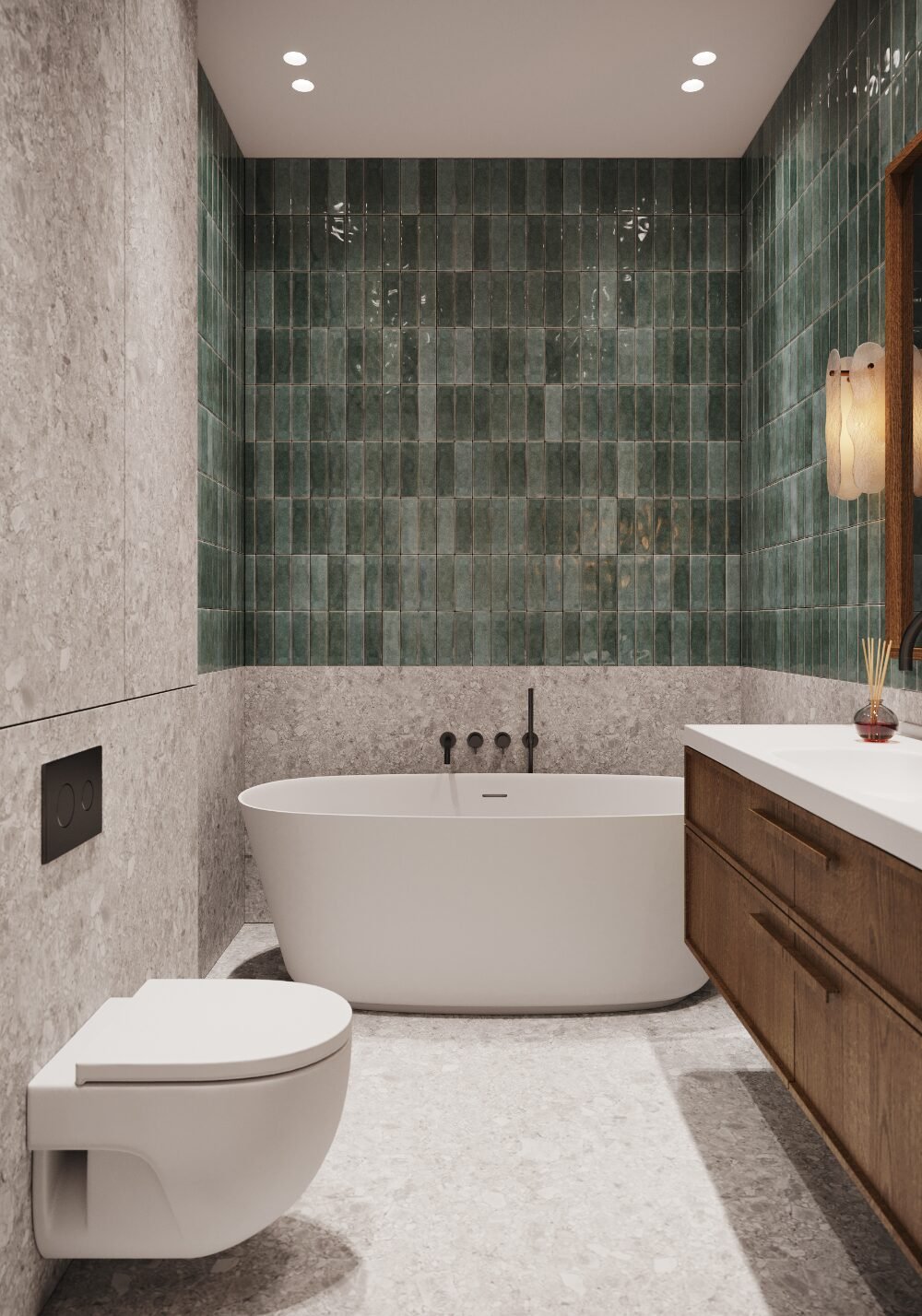
Freestanding acrylic or wooden versions exist at every price point. This one upgrade alone can redefine how you experience bathing. A deep soaking tub is the cornerstone of the Japanese bathing ritual.
10. Add a rain showerhead mounted directly overhead
A rain showerhead mimics the feeling of standing under a gentle waterfall.
No angled spray hitting your chest. Just water cascading straight down, covering your entire body.
It’s the difference between a functional rinse and a moment of meditation.
11. Consider a hand-held shower wand on a sliding rail
Flexibility matters. A sliding rail lets you adjust height whether you’re standing or sitting on a bathing stool.
It’s practical, but it also reinforces that Japanese principle of intentional washing.
12. Integrate a small water feature or fountain
The sound of trickling water is deeply embedded in Japanese culture. Think of the bamboo “shishi-odoshi” fountains you see in zen gardens.
A tabletop water feature near your tub — or even a wall-mounted spout that trickles gently — adds an auditory layer of relaxation that no candle can match.
Lighting That Whispers Instead of Shouts
13. Use warm, dimmable lighting
Harsh overhead fluorescents are the enemy of relaxation.
Swap them for warm LED strips tucked behind mirrors or under floating vanities. Install a dimmer switch. Control the mood the way you control the water temperature.
14. Add a backlit mirror for soft ambient glow
A backlit mirror doesn’t just look stunning. It eliminates that stark, unflattering glare you get from standard vanity lights.
It creates a halo effect that makes the entire room feel softer.
15. Bring in candlelight or lantern-style fixtures
Paper lantern-inspired pendant lights or simple candle holders on the tub ledge introduce flickering warmth.
There’s a reason every spa on earth uses candlelight. It signals your nervous system to slow down.
Minimalism Done Right
16. Hide everything behind closed storage
Clutter kills calm. Period.
Floating vanities with soft-close drawers, recessed medicine cabinets, built-in niches in the shower wall — your products should disappear when you’re not using them.
A Japanese bathroom looks clean because it is clean. Visually.
17. Limit your color palette to two or three tones
Whites. Warm greys. Soft beiges. Natural wood tones.
That’s it. No accent walls in turquoise. No patterned shower curtains.
Restraint is what creates that feeling of endless space, even in a tiny room.
18. Choose one statement piece and let it breathe
A single sculptural vase. A beautifully shaped soap dish. One perfect orchid.
Japanese design follows the principle of “ma” — the beauty of empty space. What you leave out matters as much as what you put in.
19. Use uniform towels in a single neutral shade
Mismatched towels make even a beautiful bathroom look chaotic.
Pick one color. One texture. Stack them neatly or roll them on an open wooden shelf. It’s a tiny change that makes an outsized impact.
Bringing Nature Inside
20. Place a living plant that thrives in humidity
Ferns, pothos, bamboo, or peace lilies — these plants love the bathroom environment.
A single green plant on a wooden shelf near the tub connects you to nature in the most effortless way possible. The Japanese call this concept “shizen” — natural, unforced beauty.
21. Use a bamboo bath tray across the tub
A bamboo tray resting across your soaking tub holds a cup of tea, a book, or simply a candle.
It’s not about accessories. It’s about creating a moment. A ritual. A reason to stay a little longer.
22. Frame a view — any view
If your bathroom has a window, don’t cover it with heavy curtains. Use frosted glass for privacy and let natural light flood in.
No window? Hang a simple nature print or a framed photograph of a forest, a coastline, or a mountain.
Your eyes need somewhere restful to land.
Sensory Details That Complete the Experience
23. Invest in a heated towel rack
Wrapping yourself in a warm towel after a deep soak is one of life’s most underrated pleasures.
A wall-mounted heated towel rack is affordable, easy to install, and makes every single bath feel like a five-star experience.
24. Use cedar or eucalyptus shower bundles
Hang a bundle of fresh eucalyptus from your showerhead. The steam activates the essential oils and fills the room with a natural, soothing fragrance.
No diffuser needed. No plug-in air freshener. Just nature doing its thing.
25. Warm your floor
Cold tile on bare feet at 6 AM is brutal. It yanks you out of any peaceful state before you even get started.
Radiant floor heating is the ultimate upgrade. But even a high-quality wooden bath mat placed strategically does the job.
26. Play ambient sound intentionally
A small waterproof Bluetooth speaker playing soft rain sounds, Japanese shakuhachi flute music, or simple white noise transforms the acoustic environment.
Sound is the most overlooked sense in bathroom design. Don’t ignore it.
27. Choose a subtle, consistent fragrance
Not perfume. Not something overpowering.
A single hinoki wood chip in a small dish. A light incense stick before your bath. A cedarwood essential oil blended with warm water in a ceramic bowl.
The Japanese concept of “kodo” — the way of fragrance — is about scent as a path to mindfulness, not decoration.
28. Keep a cotton yukata or robe hanging on the door
The ritual doesn’t end when you step out of the tub.
A lightweight robe — preferably in linen or soft cotton — hanging on a simple wooden hook extends the experience. You go from warm water to warm fabric without breaking the spell.
That transition matters more than you think.
The Real Reason This Matters
Look. You’re not just redecorating a bathroom.
You’re building a space that gives you something back. Every single day.
You’re building a place where the noise stops. Where nobody needs anything from you for twenty minutes. Where your shoulders finally drop.
The Japanese understood this centuries ago. Bathing isn’t a chore. It’s medicine.
And you deserve a bathroom that acts like one.
You don’t need to do all 28 things on this list. Start with one. Maybe it’s the ofuro tub. Maybe it’s just hiding the clutter and adding a plant.
Whatever you choose, choose it with intention.
Because that’s the real secret behind Japanese bathroom design. It’s not about the wood or the stone or the perfect lighting.
It’s about deciding that you are worth a daily ritual of calm.
And then building a room that makes it effortless.
Now go make it happen.